Ledger No. 27 · Filed weekly Madison, Wisconsin

Wisconsin's clean power ledger

The state's clean power, kept like a farm ledger.

An independent publication about where Wisconsin's power comes from and where it is going: dairy barn roofs, co-op solar gardens, the big fields in Iowa County, and the MISO grid that moves it all. Every entry says what it means for your power bill.

Read this week's top story
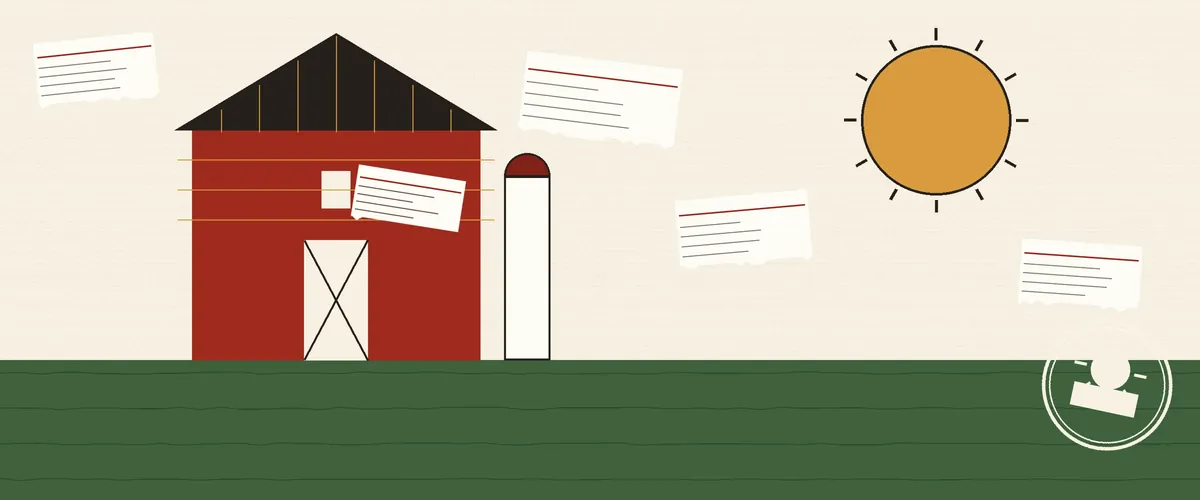
A barn-red barn with a solar panel roof and a cream silo on green pasture, a large cheddar sun, and pasted cream ticket slips on the paper
The barn roof is the newest acre in Wisconsin energy. The state's co-ops started covering it with panels years before the big utility fields broke ground, and this publication keeps the running account.

Top story · File 27

Top story

The barn raising, wired for solar

Wisconsin's electric cooperatives did not wait for permission to build solar. They put small arrays on member lots from Arcadia to Phillips, stacked up grants for farm roofs, and now a dairy barn with panels reads as ordinary as a silo. This week we read the ledger: what the co-ops built, what the big utilities added, and what a USDA grant can do for one farm's bill.

The short version: the co-ops got there first, the big fields in Iowa County changed the scale, and the money side runs through two programs most farmers have never opened.

Read the full story
Worth your two minutes

If you get power from a co-op, or you could subscribe to a shared solar garden, some of those panels are closer to yours than you think. The story above explains which bill lines to watch.

Stories · dated entries

Stories

Short entries from the ledger, each dated and checkable. Longer reporting lands as a top story.

Filed Sept. 20 · Co-ops

The little arrays that added up

Dairyland Power's member co-ops own solar lots sized at roughly 1 to 2.5 megawatts apiece, from Arcadia and Centuria to Phillips and New Auburn. No single one makes headlines. Together they taught the co-op system how to buy, build, and run solar, which is why the bigger community gardens went up without drama.

Filed Sept. 13 · Weather

Snow on the panels is not the problem you think it is

Cold air helps panels perform, and sun bouncing off snow adds a little. What winter really does is shorten the day and raise the evening peak, when farms run heaters and the whole state switches its lights on. Winter supply, honestly, comes from the grid and the wind fleet, not the barn roof.

Filed Sept. 6 · The grid

MISO, explained from a milk-house window

Most of Wisconsin's grid is run by the Midcontinent Independent System Operator, a nonprofit that schedules power plants and keeps the wires balanced across 15 states and Manitoba. You cannot buy power from MISO directly, but every megawatt on your co-op's lines clears through its market room.

Filed Aug. 30 · Money

Two programs that shave the cost of a farm array

The USDA's Rural Energy for America Program has funded Wisconsin farm energy projects since at least 2010, and the state's Focus on Energy program runs incentives for agricultural efficiency and renewables. Neither covers the whole project. Both change the payback math enough to matter.
Where things stand · checked Sept. 27, 2026

Where Things Stand

300 MW

Badger Hollow Solar Farm

Iowa County, near Cobb and Montfort. Owned by Wisconsin Public Service and Madison Gas and Electric; the second phase came online in 2023.

50

Member co-op solar installations

Supported by Dairyland Power across its four-state service area, most sized around 1 to 2.5 megawatts each.

4,800+

Consumer-owned systems

Rooftop and small arrays on co-op lines, counted by Dairyland at last public report.

15 states

The MISO grid

Wisconsin's grid operator spans 15 states and Manitoba, scheduling plants and balancing the wires from its market room.

None of this moves your bill by itself. What moves it is whether your co-op or utility opens a shared solar garden you can subscribe to, whether a farm array near you lands a federal grant, and whether new transmission gets built before the next winter peak. Those are the lines to watch on your statement.

The seasonal ledger · illustrative figure

The Seasonal Ledger

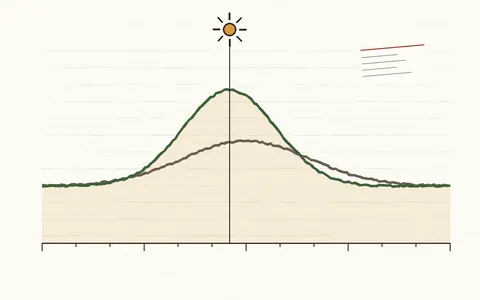
Wisconsin sun is a seasonal business. The figure below shows why co-ops treat winter as a grid problem, not a panel problem.

A hand-drawn ledger chart showing a tall green summer solar curve and a low umber winter curve across a ruled year, with a small sun marking noon
An illustrative year on one Wisconsin array: a long summer day delivers roughly twice the sun of a December day. The curves are drawn to explain the shape, not to report meter data.
  • Cold helpsPanels convert sunlight more efficiently in cold air, so a bright January hour can outproduce a hazy July one.
  • Snow hinders a littleHeavy cover blocks light until it slides or melts off tilted panels; the bright ground returns some light back up.
  • Winter peaks ruleThe grid's hardest hours are dark winter evenings. That is a job for the whole system: wind, gas, imports over the wires, and eventually storage.

How we work · the house rules

How We Work

Sources

We cite primary sources only: the grid operator, state and federal pages, utilities, and project companies. No news outlets, no blogs, no aggregators. Every entry ends with its sources of record.

Numbers

Every number is hedged and checkable: roughly, on the order of, at last public report. If a figure could move, we say when it was counted.

Places

We name counties, co-ops, programs, and bill lines. If you could not point to the thing on a map or a statement, we get more specific or drop it.

Corrections

Entries are dated and never silently rewritten. When we get something wrong, we say so in plain language at the top of the entry.